Boyd's photo diary. |
|
|
|
|
|
|
|
|
Sun 31 Mar 2019
|
Morning cycled to Dean's to change the oil in my Rohloff
speedhub |

My Rohloff speedhub 14 after the oil change |

Rohloff inner workings |
|
|
|
Caught bus Chorley Little Theatre for 16:00 and 16:30 showing of
the film Bohemaian Rhapsody. It’s the 5th time I’ve seen it. The
theatre was sold out as was the evening performance. |
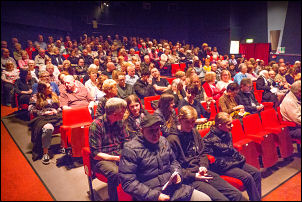 |

Sold out |
|
|
|
Sat 30 Mar 2019
Drove to the Atlantic Wall on Sheriffmuir.
The Atlantic Wall
is close to the Sheriffmuir Road and was used to test weapons as
preparation for the attack on the Atlantic Wall in Normandy.
A series of concrete defence structures built along the west
coast of Europe from the northern tip of Norway to Spain. Its
purpose was to protect against an anticipated Allied invasion of
mainland Europe from the British Isles.
In the spring of 1942
the scheme for encasing all Europe in a solid girdle of concrete
had one overall title: Atlantic Wall (German: Atlantikwall). The
wall was constructed by the Germans, using slave labour, between
1942 and 1944.
During WW2 British Military Intelligence
gathered information about the German’s Atlantic Wall – its
size, structure and the materials it was made of. For a
successful seaborne invasion into occupied France the Allied
Forces knew they would have to break through these German
defences.
A great deal of effort was put into developing
technology to achieve this, including the specialised tanks –
known as “Hobart’s Funnies” – developed by Major-General Percy
Hobart.
Vital information came from the French Resistance,
and other sources such as aerial photographs. This enabled
accurate mock-ups of the Atlantic Wall to be built in various
locations in the UK. These were used for military training and
testing prior to D-Day in June 1944.
Dunblane Museum heard of
a local man who had, in 1943, been involved with the
construction of the wall at Sheriffmuir.
In August 2012
Gordon Drew sent a letter about his time in Dunblane. He
apologises that his memory is not as clear as it was:
“49th
Division came to Scotland in July 1943 for training in its role
of assault division for the Normandy landings. The various units
of its infantry, artillery, engineers, etc were located in all
areas across the country from Ayrshire to Inverness, and moved
around training sites such as Rothesay, Tighnabruach, Inverary,
Dunblane. In late 1943, I spent 3 weeks in Dunblane with my
platoon from 756 Field Coy Royal Engineers.”
Info from
http://atlanticwalls.uk/ |

Tobruk Shelter |

Atlantic Wall |
|
|

Flooded bunker below the Tobruk Shelter |

Map from the Forth Naturalist and Historian publication volume
22 |
|
|
|
Fri 29 Mar 2019
|
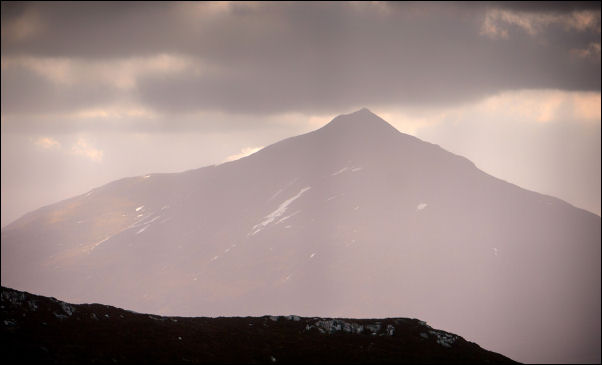
View of Schiehallion |
 |
|
Mon 25 Mar 2019
|
Cycled to Bamber Bridge. The Hob Inn is having a new thatch roof
fitted after fire last year. Passed Sirloin Inn Hoghton which
was boarded up. Apparently there had been a fire on 2nd Feb
2019. |

Hobb Inn |

The Sirloin |
|
Sat 23 Mar 2019
|
This morning I wandered up to the Rivington Seven Arch Bridge
for the 11am opening of the Gardens and Pigeon Tower after
extensive restorations. At 11:30 our local MP Sir Lindsay Hoyle
cut the tape by the Pigeon Tower to make it official.
Representatives from the Lottery Fund and United Utilities were
also there. Some pigeons were then released. It was great to be
able to see inside the Pigeon Tower which was built in 1910. I
hadn’t been inside since the 1960s when there were no useable
floors. |

The first official visitors at 11am |

Outside the station |

The Pigeon Tower built in 1910 |

Top of the spiral staircase |
|
|

The top floor of the Pigeon Tower is the sewing and music room
used by Lady Lever. |
 |
|
The top floor of the Pigeon Tower is the sewing and music room
used by Lady Lever. Above the fireplace in a circle are the
letters WHEEL which are the initials of William Heskth and
Elizabeth Ellen Lever. Below is the family motto: MUTARE VEL
TIMERE SPERNO - "To change or to fear I spurn" |

Local MP Sir Lindsay Hoyle cut the tape by the Pigeon Tower to
make it official. Representatives from the Lottery Fund and
United Utilities were also there. |

Cutting the tape |

Releasing the doves |

View from the top floor |

Sir Lindsay Hoyle MP |
|
|
|
Mon 18 Mar 2019
|
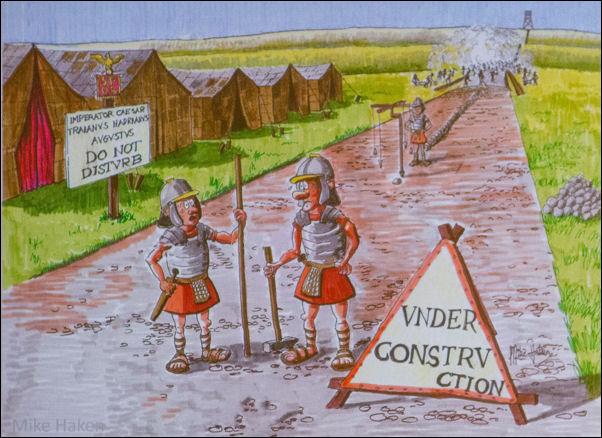
Evening at brindle Historical Society for David Ratledge's talk
on Roman Roads. |
 |
|
Sun 17 Mar 2019
|
|
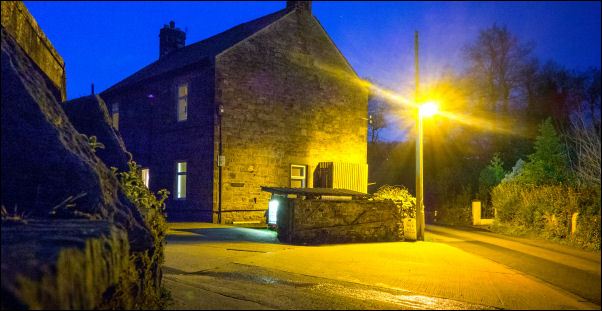 |
Cycled to Denham Springs
Farm Lower Copthurst to buy local milk from the fridge in the
yard. Paying by honesty box. |
 |
|
Sat 16 Mar 2019
|
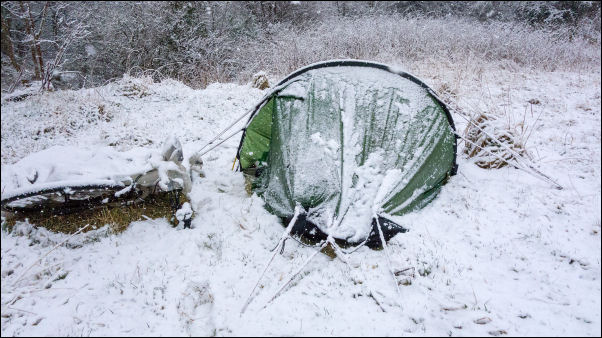
Not the sort of weather I wanted for the start of my final stage
cycling to Edinburgh |
 |
|
|
|
|
Sun 10 Mar 2019
|
14:30 at Leyland and the South Ribble Museum for local history
walk let by Dr David Hunt. It was based on an old map dated
1740. We finished in the Parish Church. |

Vicars of Leyland |

William Charles Baldwin |
|
|

Dr David Hunt in the Parish Church Leyland |

|

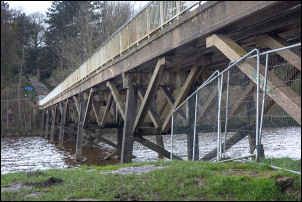
The Old Tramroad Bridge over the River Ribble.
1862 view by
Thomas Lynch |
The tramroad bridge has now been closed |
 |
|
|
|
Thu 07 Mar 2019
|
Drove to Preston for 7am and left my car at the taxi firm car
park on Manchester Road £2 for the day. Walked to Preston Rail
Station to catch the 08:03 train to Glasgow. I waited at Glasgow
for the 12:00 noon guided tour of the underground area of the
station conducted by Paul Lyons and his long beard. An excellent
tour. Caught the 14:40 back to Preston |

Glasgow Central Railway Station |

Outside the station |
|
|

Paul Lyons and his amazing tour |

A long abandoned platform |
|
|
|
Wed 06 Mar 2019
|
A view from inside the cave in Borrowdale where Millican Dalton
(1867 - 1947) used to live. |
 |
|
|
|
|
Sat 02 Mar 2019
|
Morning at South Ribble Museum to hear a lecture by the curator
Dr David Hunt |
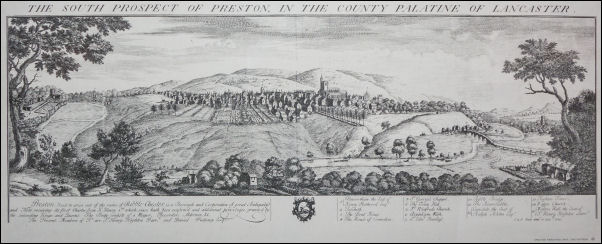 |
On the upper corridor wall is this print of:
The South
Prospect of Preston, in the County Palatine of Lancaster.
Engraving by Samuel and Nathaniel Buck (1728) |
This evening I was out on a walk via Lower Copthurst,
Whittle-le-Woods. The rain had just started as I crossed the
bridge over the River Lostock. I stopped to take a photo and was
reminded of and unfortunate fatal accident 148 years ago.
This spot was the scene of a terrible incident in 1871. The
Brindle Workhouse would soon be closing as the new Workhouse in
Chorley neared completion. |

Lower Copthurst |
Samuel Stancliffe, the last master,
had been appointed to set up and run the new workhouse at Eaves
Lane in Chorley. The ‘new’ workhouse was to replace both the
smaller Chorley one and the large workhouse he was already
running in Brindle. Samuel never lived to see the project
through. On a dark and stormy November night, he was coming back
from the new project in Chorley with his overseer by the back
lanes north of Chorley to Brindle when his pony and cart
overturned in a flooding River Lostock at Lower Copthurst. The
pony and Samuel Stancliffe were drowned and the overseer died
soon afterwards.
The incident was covered extensively in the
national press.
It was also documented in the diary of Thomas
Blinkhorn Parke, the owner / manager of Withnell Fold Paper
Mill.
He said:
1871 Tue 14 Nov T.B.P. diary
Wet
afternoon. Gaskell & Brindle Workhouse Governor upset at Copster
Bridge @ 7:30 PM
Pony & Governor were both Dead when found
and Gaskell Died soon after getting home. |

Lower Copthurst around 1920 by Eddie Hodkinson |
|
|
|
|
Fri 01 Mar 2019
|
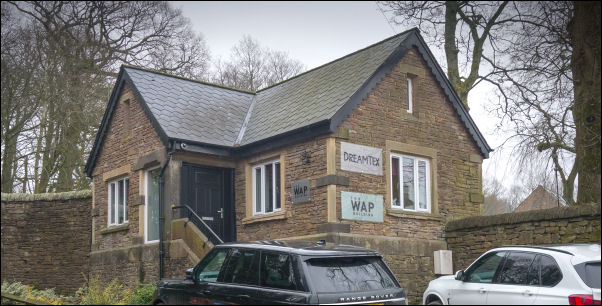
Cycling along Back Lane Whittle-le-Woods was good to see the WAP
house occupied by DreamTex |
 |
|
|
|
|
|
|
|
|
