|
The wind had died down a lot by
morning so I had no problems packing the tent away. I returned to
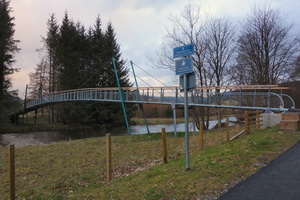
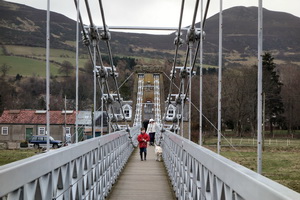
the Tweed Valley Railway path and the footbridge over the River
Tweed. The new tarmac I’d seen yesterday continues at the far side
of the bridge and all the way to the road junction in Innerleithen. |
|
|
|
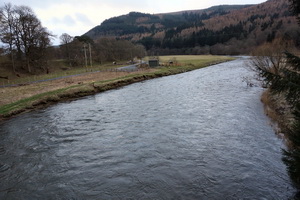
River
Tweed from the bridge |
|
|
|
|
|
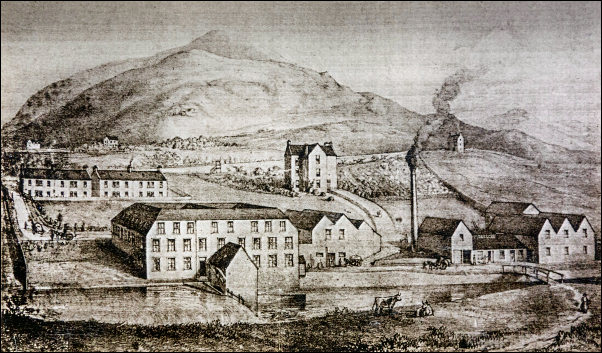
Tweed Mill built 1846 |
|
The weather was still overcast but
caused no problems while cycling. Through the town I continued east
along the A72. I came to Walkerburn and stopped to look at the
information board. It told of the founding of the town in 1854 with
the Tweed Mill. |
|
|
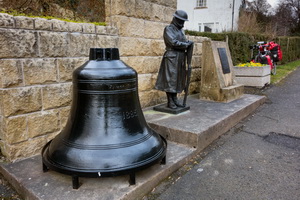
Further along the road was the old
mill bell. (add more) I continued to Caddonfoot then to the bridge
over the River Tweed. I was concentrating too much on the bridge and
missed the left turn on to the B7060. I returned and joined the
correct route. After a steady climb I enjoyed the winding road back
to the Tweed and the A7. |
|
|
|
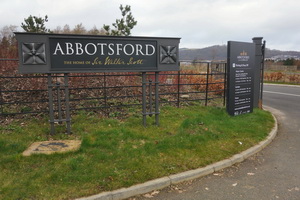
Abbotsford House entrance |
|
|
I turned right for only a short
distance then turned left on to the B6360. It was a lovely quiet
road through the woods. It climbed steadily until I came to the
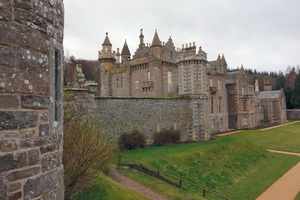
entrance to Abbotsford, the home of Sir Walter Scott. It was 09:40am
as I cycled down to the Visitor Centre entrance. |
|
|
 |
 |
|
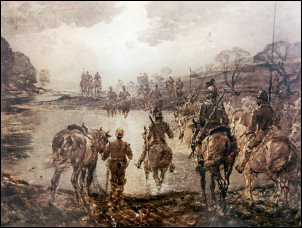
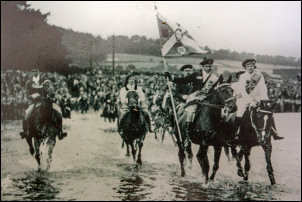
Braw Lads gathering
in Galashiels. A part of the Borders tradition
of ceremonial patrolling of the frontier town on horseback |
|
|
|
|
The sign said they didn’t open till 10
but a lady came out and told me the best places to get a view of the
house. I ventured part way down a muddy track to the river but soon
gave up and returned to the centre. The lady let me in early so I
could have a walk through the grounds before the official opening
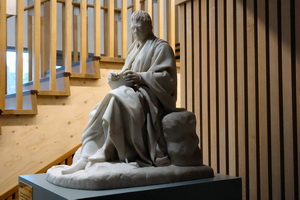
time. The exhibitions in the centre were fascinating and I wonder
what Sir Walter would have made of all this if he were around today. |
|
|
|
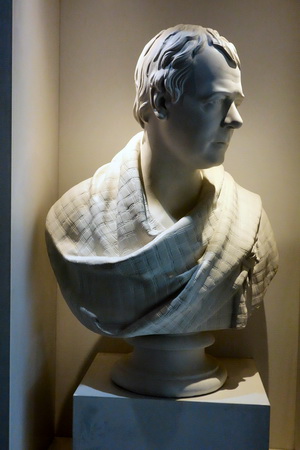
Sir
Walter Scott (1771-1832) |
|
|
|
|
|
|
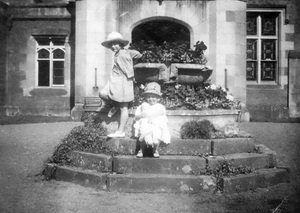
Descendants of Sir Walter Scott c1920 |
|
|
I continued to Tweedbank and through
houses to descend to a bridge over the River Tweed. On the B6360 I
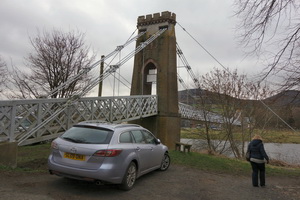
continued on to Gattonside and down to the chain bridge. It was
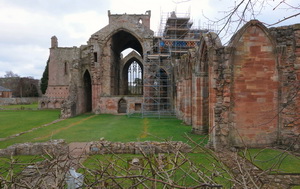
constructed in 1826 but doesn’t look it. Then to Melrose Abbey which
was still shrouded in scaffolding as it was at my last visit.
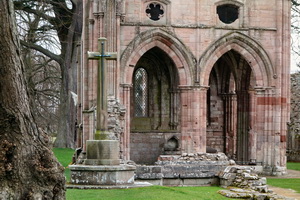
Through Melrose I cycled along the old road to the Eldontree Stone. |
|
|
|
|
|
|
|
|
|
|
|
|
|
|
|
|
|
|
|
|
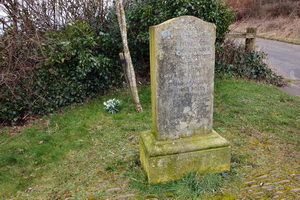
I’m not too sure what its significance
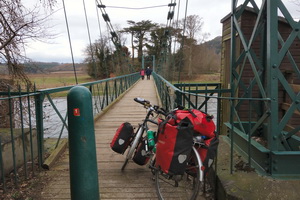
is. A lovely descent by Bogleburn Strip took me to another
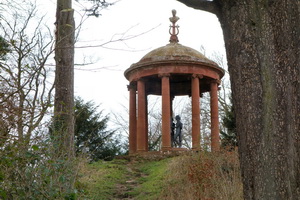
footbridge crossing of the Tweed to an interesting structure called
a temple, which it isn’t. The information plaque calls it ‘The Muse
of Nature’ to James Tomson (1700-1748) dating from the 1700s. I
don’t think it is that old. The bronze lady statues are certainly
not 18th century. |
|
|
Up the hill I cycled to Dryburgh
Abbey. It was a pay to get in but the attendant told me of a path I
could use to see the ruins from outside the grounds. The ruin is
where Sir Walter Scott is buried. |
|
|
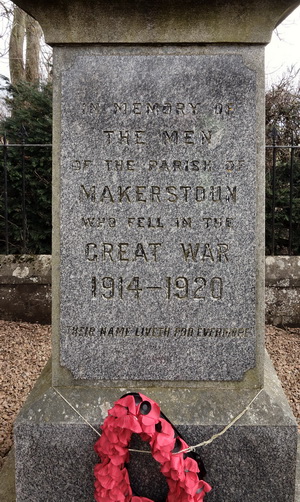
I left to continue my way towards
Kelso. I was following an official cycle route but didn’t see many
cyclists. At Makerstoun I stopped to photograph the war memorial
because of the dates. It said Great War 1914-1920. Few say that. |
|
|
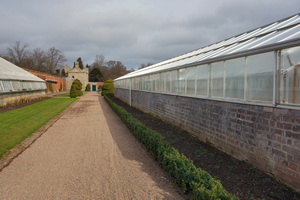
I reached an entrance to Floors Castle
which said tea room and garden centre. I followed a stony track to
the centre but the Castle was closed. I returned to the road and in
to the outskirts of Kelso to get some water from the Co-Op. I cycled
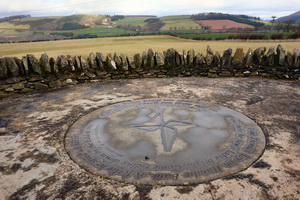
by the race course and up to the monument to James Thomson
(1700-1748) the author, amongst other things of Rule Britannia. I
camped here last month and decided to camp here again. |
|
|
|
Floors
Castle garden centre |
|
|
|
 Return to
Whittle Wanderer
Return to
Whittle Wanderer